
A garden path might seem like a small detail, but it can completely change how an outdoor space feels and functions. The right pathway makes a garden easier to move through, helps protect lawns from wear and gives the whole layout a more finished look.
For many homes across Telford, from older properties around Wellington and Madeley to newer developments in Lawley and Priorslee, gardens often need better structure. A pathway can help connect patios, lawns, seating areas, sheds and gates in a way that feels natural rather than awkward.
At SM Landscaping, we often find that a well-planned path is one of the simplest ways to improve a garden without redesigning the entire space.
Why Garden Pathways Matter
A good pathway does more than get you from one area to another. It helps guide the eye, creates flow and makes the garden easier to use throughout the year.
Without a proper path, people naturally cut across lawns or muddy areas. Over time, this leads to worn grass, uneven ground and messy patches, especially during wet weather. A properly built path solves that problem while adding a smart, practical feature to the garden.
Pathways are especially useful in family gardens, sloped gardens and outdoor spaces with different zones, such as a patio, lawn, planting area or storage space.


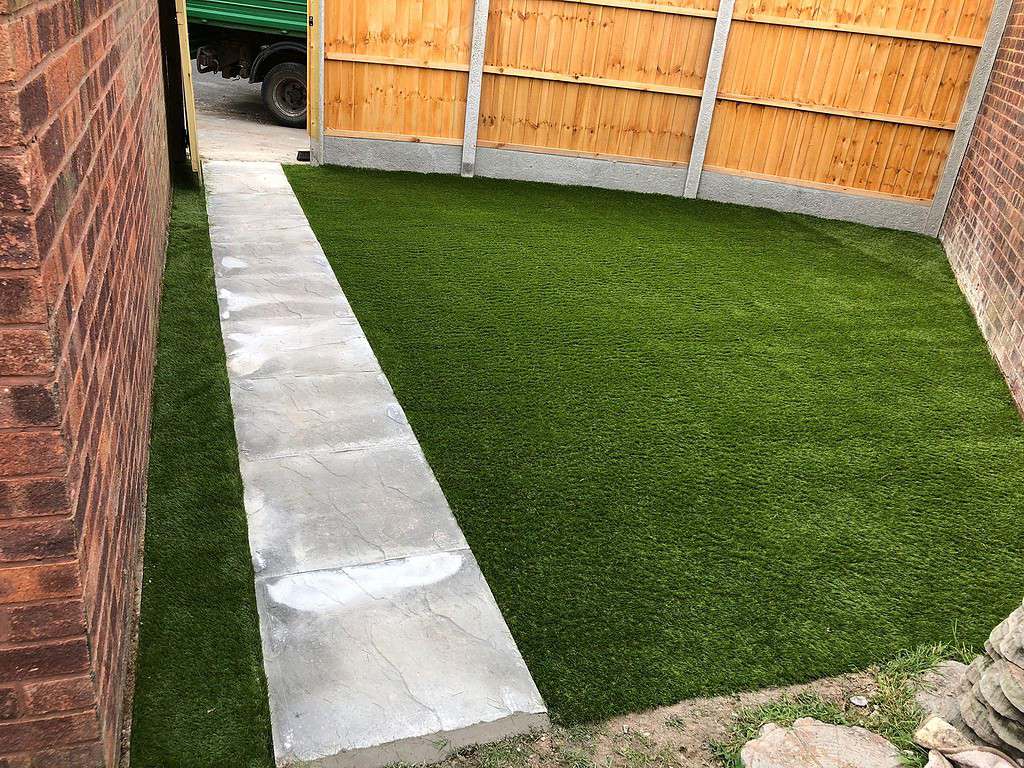
Think About How You Use the Garden
Before choosing materials or shapes, start with how the garden is actually used.
Do you need a clear route from the back door to a shed? Is there a side gate used for bins or garden tools? Do children regularly move between the lawn and patio? These everyday movements should shape the pathway design.
A path should feel natural. If it is placed in the wrong location, people may avoid using it altogether. The best designs follow the routes people already take, then make them cleaner, safer and more attractive.
Choosing the Right Pathway Material
The material you choose will affect the look, maintenance and durability of the pathway.
Porcelain paving is a good choice for modern gardens. It gives a clean finish, is easy to maintain and works well alongside contemporary patios.
Natural stone suits more traditional gardens and properties with softer planting or older brickwork. Each slab has its own variation, which gives the path character.
Gravel can work well for informal paths, especially when paired with strong edging to keep it contained. It is often used in front gardens, side access routes and decorative areas.
Block paving is another durable option, particularly where the path needs to match a driveway or create a more structured appearance.
The right choice depends on the style of the property, the amount of foot traffic and how much maintenance you are happy to do.
Drainage Should Never Be an Afterthought
Like patios and driveways, pathways need proper drainage. If water sits on the surface or collects around the edges, the path can become slippery, stained or unstable over time.
This matters even more in parts of Telford where gardens sit on heavier ground or have uneven levels. After heavy rain, poorly drained paths can quickly become a problem.
A well-installed pathway should have the correct base, suitable levels and a clear route for water to move away. When drainage is planned properly, the path stays safer and easier to use in all seasons.
Straight Paths or Curved Paths?
The shape of the path has a big impact on the feel of the garden.
Straight paths create a clean, modern look and work well in smaller gardens where you want the space to feel organised. They are also practical for side access routes and front gardens.
Curved paths feel softer and can make a garden seem more relaxed. They are useful in larger gardens where you want to create a sense of movement or lead the eye towards a seating area, feature bed or view.
There is no right or wrong choice. The best shape is the one that suits the layout and feels comfortable to use.
Use Edging for a Neater Finish
Edging is one of those details that makes a pathway look professional. It keeps gravel in place, separates paving from lawns and helps stop borders from spilling onto the path.
Without edging, even a well-built pathway can start to look untidy over time.
Edging can be subtle or decorative, depending on the style of the garden. It may be created using blocks, stone, timber sleepers or other hard landscaping materials. The goal is to give the path a clean boundary and help it hold its shape.
Pathways Can Improve Front Gardens Too
Pathways are not just for back gardens. A clear route to the front door can make a property feel more welcoming and improve kerb appeal.
For homes near busy routes around Telford or residential areas close to places like Telford Town Park, Dawley or Oakengates, a tidy front path can make a strong first impression.
It also adds practicality, especially in winter when grass and soil can become wet underfoot.
Lighting Can Make Paths Safer
If a garden path is used in the evening, lighting is worth considering. Subtle lighting along a pathway improves visibility and makes the garden feel more inviting after dark.
This is particularly useful for steps, changes in level and side access routes. Lighting does not need to be over the top. A few well-positioned fittings can make the space safer while adding atmosphere.
A Small Feature With a Big Impact
A pathway may not be the largest part of a garden, but it can make a huge difference to how the space works. It improves access, protects lawns, supports drainage and helps connect different areas together.
When designed properly, it also adds structure and makes the garden feel more complete.
At SM Landscaping, we help homeowners across Telford and surrounding areas create practical, well-finished outdoor spaces. Whether you need a simple garden path, a new patio, improved edging or a wider landscaping project, careful planning makes all the difference.
A good garden should be easy to use, not just nice to look at, and the right pathway is often a great place to start.

Do you need help from our experts
Give us a call today to get expert advice and support from our experienced team.