
Awkward Garden Corners: How to Turn Wasted Space Into Something Useful
Most gardens have at least one awkward corner. It might be a shady patch that never dries properly, a narrow section behind the garage, a wasted space near the fence or a sloped area that does not seem to have a clear purpose.
These areas are easy to ignore. Over time, they become dumping grounds for old pots, garden toys, tools or furniture that does not really have a home. But with the right landscaping, even the most difficult corners can become useful, attractive parts of the garden.
For homes across Telford, from new build gardens in Lawley and Priorslee to older properties around Wellington, Madeley, Dawley and Oakengates, making better use of awkward space can completely change how a garden feels.
At SM Landscaping, we often find that the most underused part of a garden has the most potential.
Start by Understanding Why the Space Feels Awkward
Before deciding what to build, it helps to work out why the corner is not being used.
Is it too shaded? Does water collect there after rain? Is it difficult to access? Does it feel overlooked by neighbouring homes? Is the ground uneven or sloped?
The answer will shape the best solution. A damp, shaded corner may not be ideal for a seating area, but it could work well with planting, gravel or a practical storage route. A sunny corner at the back of the garden might be perfect for a quiet bench, small deck or raised feature bed.
Good garden design starts with how the space behaves, not just how you want it to look.
Create a Small Seating Area
A corner seating area can make a garden feel much more usable, especially if the main patio is close to the house.
This works particularly well in gardens where the best sunlight is at the far end. Instead of leaving that section unused, a small paved area, bench or compact table set can turn it into a peaceful spot for morning coffee or evening sun.
A simple patio area does not need to be huge. Even a small, well-laid section with neat edging and planting around it can feel intentional and inviting.
For gardens that are overlooked, adding screening, taller planting or a raised bed nearby can make the space feel more private.
Use Decking to Handle Uneven Ground
Some awkward corners are difficult because the ground is uneven. This is common in older gardens, sloped plots and homes close to more varied ground around areas like Ironbridge, The Wrekin and parts of Wellington.
In these cases, decking can be a practical option. It can create a level surface without needing to flatten the whole garden.
Decking can work well for a raised seating area, a small viewing spot or a link between two different levels. The important thing is making sure the structure underneath is properly built, with good support, safe access and suitable drainage.
A deck should feel like part of the garden, not something added as an afterthought.
Add Raised Beds for Shape and Colour
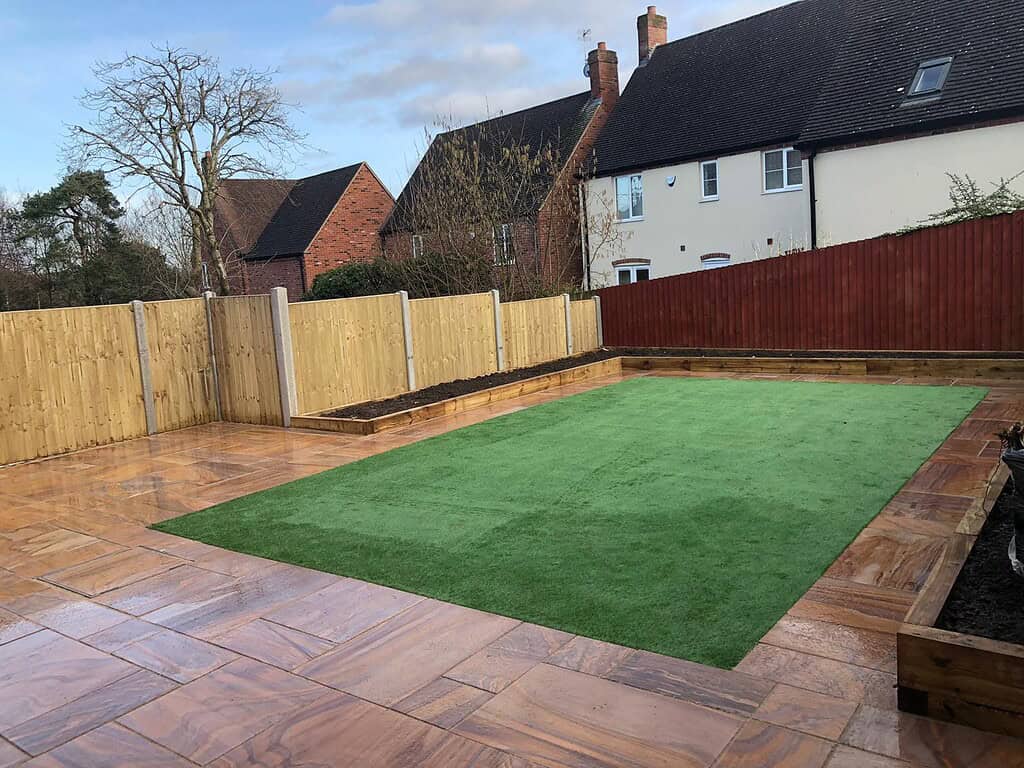
Raised beds are one of the best ways to improve awkward spaces. They add structure, lift planting higher and help soften hard or empty corners.
A raised bed along a fence line can turn a plain boundary into a much more attractive feature. It can also hide uneven ground, improve privacy and make planting easier to manage.
Sleepers, brick, stone or rendered blockwork can all be used depending on the style of the garden. For modern Telford homes, clean lines and simple planting often work well. For older properties, timber and softer planting may feel more natural.
Raised beds are especially useful where a corner feels bare but you do not want to lose too much floor space.
Turn a Narrow Side Area Into a Practical Route
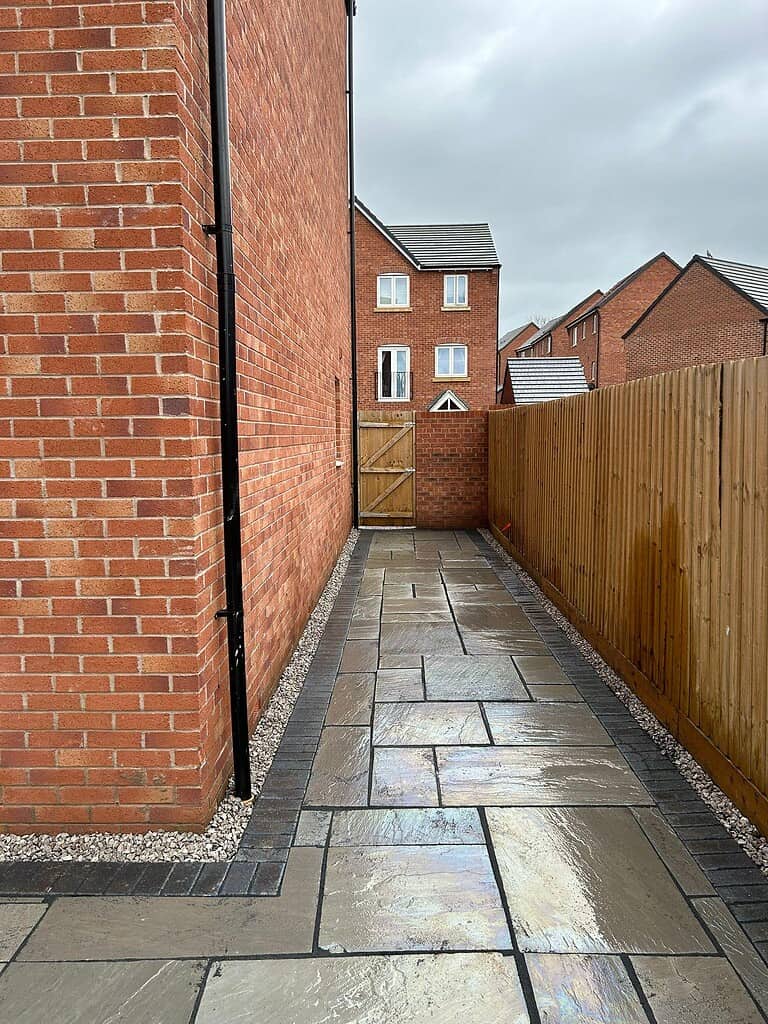
Side areas often become neglected because they are too narrow for seating or planting. But they can still be very useful.
A properly finished side path can improve access to gates, bins, sheds or storage. It also stops muddy tracks forming where people walk regularly.
Materials such as block paving, gravel with solid edging or paving slabs can create a clean route that is much easier to maintain. If the area is used often, good drainage and a stable base are important.
This is a simple upgrade, but it can make day-to-day life much easier.
Use Fencing or Screening to Make the Corner Feel Finished
Sometimes an awkward corner feels unfinished because the boundary behind it looks tired.
Replacing old panels or adding screening can instantly improve the area. Strong, well-installed fencing can make the garden feel more private, secure and cared for.
For smaller spaces, slatted screening or trellis can work well because it adds privacy without making the garden feel too closed in. Climbing plants can also help soften the structure over time.
A better boundary often makes it easier to decide what the space should become.

Consider Low Maintenance Surfaces
Awkward corners are often difficult to mow, weed or keep tidy. That is why low maintenance surfaces can be a smart choice.
Decorative stone, gravel, paving or artificial grass can all help turn a messy patch into something cleaner and more practical.
The key is using edging properly so materials stay where they should. Without defined edges, gravel spreads, soil moves and the space quickly starts to look untidy again.
A simple, low maintenance finish is often better than trying to force a high-maintenance feature into a space that does not suit it.
Think About Storage, But Keep It Tidy
Not every corner needs to become a seating area or feature. Sometimes, the most useful option is storage.
A shed, bin screen, log store or small storage area can work well if it is planned properly. The mistake many homeowners make is allowing storage to take over without any structure.
By adding a proper base, clear access and screening, storage can become part of the garden rather than something that spoils the view.
This is particularly useful for family gardens where bikes, tools and outdoor equipment need somewhere sensible to go.
Check Rules Before Larger Garden Buildings
If you are thinking about adding a larger structure, such as a garden room, covered seating area or substantial outbuilding, it is sensible to check the rules before starting work. The government’s Planning Portal guidance on outbuildings is a useful place to start, although requirements can depend on the property and the type of work planned.
For most smaller landscaping features, the process is straightforward. But checking early avoids surprises later, especially if the garden has boundaries close to neighbours or sits within a more sensitive location.
Make the Whole Garden Feel More Complete
Awkward corners can make a garden feel unfinished, even if the rest of the space looks good. Once those areas are dealt with, the whole garden often feels more balanced.
You do not always need a full redesign. A small patio, raised bed, pathway, screen or practical storage area can be enough to make the space feel considered.
At SM Landscaping, we help homeowners across Telford and surrounding areas make better use of their outdoor spaces. From patios and decking to fencing, driveways, artificial grass and complete garden design, we focus on creating gardens that work properly in everyday life.
If there is a corner of your garden that never gets used, it might have more potential than you think.

Do you need help from our experts
Give us a call today to get expert advice and support from our experienced team.