
Garden decking can be a great addition to an outdoor space, providing somewhere to relax, entertain guests or make better use of uneven ground. However, when boards begin moving underfoot or the timber starts showing signs of rot, it is important to understand whether the problem can be repaired or if a replacement is needed.
For homeowners across Telford, Wellington, Madeley, Dawley and surrounding Shropshire areas, decking has to cope with changing temperatures, heavy rainfall and prolonged damp conditions.
While a weathered appearance does not necessarily mean the decking is failing, loose boards, weakened supports and soft timber can indicate more serious problems.
At SM Landscaping, we help homeowners with decking repairs and new installations. Understanding what is causing the damage is the first step towards choosing a practical, long-lasting solution.
Why Does Garden Decking Start to Rot?
Timber decking is constantly exposed to the elements, but moisture is one of the biggest factors behind deterioration.
When wood remains damp for extended periods, conditions can develop that allow fungal decay to affect the timber.
This is particularly common where decking receives little sunlight, leaves collect between boards or water becomes trapped beneath the structure.
Poor ventilation can make the problem worse. If air cannot circulate underneath the decking, moisture may take longer to evaporate, leaving the supporting timber damp.
Over time, this can weaken boards, joists and other structural components.
However, it is important to remember that timber naturally changes colour as it ages. A deck turning grey does not automatically mean it is rotten.
The condition and strength of the wood matter much more than its colour.
Signs Your Decking May Be Rotten
Rotting decking often shows warning signs before significant structural damage becomes obvious.
You might notice boards becoming soft, timber splitting around fixings or sections breaking away near the edges.
In some cases, individual boards begin to crumble or develop visible areas of decay.
A musty smell beneath the decking can also suggest persistent dampness, although it does not confirm that the timber is rotten.
One of the more concerning signs is movement when someone walks across the surface.
If the boards feel unusually flexible or appear to be losing their support, the problem may extend beyond the visible decking.
Where significant deterioration is suspected, avoid using the affected area until the structure has been properly inspected.
Why Does Decking Move When You Walk on It?
Not all movement is caused by rotting boards.
Sometimes the problem comes from loose fixings, damaged joists or weaknesses within the supporting frame.
Deck boards are normally secured to joists beneath the surface. If the fixings begin to fail or the timber around them deteriorates, individual boards can loosen.
However, movement affecting a larger section of decking may indicate a problem with the framework or foundations.
For example, support posts can become unstable if they were installed on unsuitable ground or without adequate foundations.
This is especially important with raised decking, where the structure needs to support the weight of people, furniture and other everyday loads.
A deck that noticeably bounces, shifts sideways or feels unstable should be assessed before further use.
How Ground Conditions Affect Decking in Telford
The ground beneath a decking structure plays an important role in its stability.
Gardens across Telford vary considerably, from relatively level plots in newer developments around Lawley and Priorslee to properties with noticeable changes in height around Wellington, Madeley and Ironbridge.
On sloping ground, decking may rely on elevated supports to create a level seating area.
If the foundations are inadequate or the supporting ground begins to settle, the structure can gradually move out of position.
Drainage also matters. Water collecting around posts or beneath a timber frame can contribute to deterioration, particularly where the materials are not suitable for prolonged moisture exposure.
Proper foundations, suitable materials and ventilation are therefore essential when planning a new decking installation in Telford.
Can Rotten Decking Boards Be Replaced Individually?
In many cases, yes.
If the damage is limited to one or two boards and the supporting framework remains in good condition, replacing those boards may be a sensible repair.
The damaged timber can be removed and suitable replacement boards installed using appropriate outdoor fixings.
However, the condition of the joists underneath should always be checked before assuming the repair is straightforward.
If the boards have deteriorated because water is constantly collecting beneath them, simply replacing the surface may not resolve the underlying problem.
The same deterioration could eventually affect the new materials.
This is why a proper inspection matters. A small repair can be cost-effective when the surrounding structure is sound, but it is not the right solution for every deck.
When Is It Better to Replace the Entire Decking?
Replacing the decking becomes a more sensible option when the damage affects several areas or the supporting structure is no longer reliable.
If multiple boards are rotten, joists are weakened or the frame has started moving, isolated repairs may only provide a temporary improvement.
A full replacement allows the original construction to be assessed and any unsuitable materials or foundations addressed.
It also creates an opportunity to improve the layout.
For example, an older deck might be too small for outdoor furniture, poorly positioned for sunlight or difficult to access from the house.
Rather than rebuilding the same arrangement, homeowners may choose a larger seating area, improved steps or a different material.
Where the garden layout needs more substantial changes, professional garden design services can help ensure the new decking works alongside surrounding paths, planting areas and patios.
Timber Decking or Composite Decking for a Replacement?
If you decide to replace your decking, it is worth considering whether timber or composite boards would be more suitable.
Timber decking provides a traditional, natural appearance and can work particularly well in gardens with established planting and wooden fencing.
However, it requires ongoing maintenance to help protect the material and manage moisture-related problems.
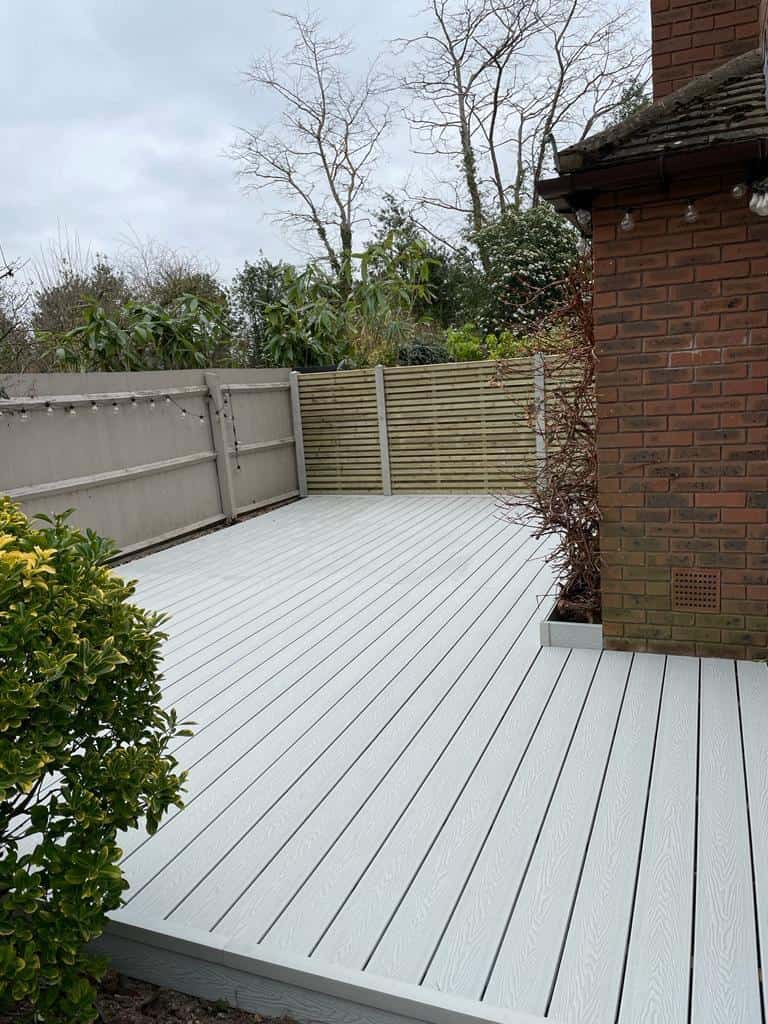
Composite decking is often chosen by homeowners who want a more consistent appearance with less routine upkeep.
Although composite boards do not rot in the same way as natural timber, they still require correct installation and cleaning. If composite boards are fitted onto a timber framework, that supporting structure must also be suitable for outdoor conditions.
Neither material compensates for poor foundations or inadequate drainage.
The best choice depends on the design of the garden, your budget and how much maintenance you are comfortable carrying out.

How to Prevent Decking From Deteriorating Too Quickly
Regular maintenance can help extend the life of garden decking.
Removing leaves, dirt and organic debris prevents moisture from remaining trapped on the surface for unnecessary periods.
Keeping spaces between boards clear also helps water drain away.
It is worth checking the decking periodically for loose fixings, damaged boards and signs of deterioration around the supporting structure.
The Timber Decking & Cladding Association’s decking maintenance guidance recommends regular cleaning and appropriate maintenance to help preserve decking condition and reduce slippery surface build-up.
For timber decking, suitable protective treatments may also help maintain the finish, although they cannot repair wood that has already suffered structural decay.
It is better to address minor problems early rather than wait until several sections become damaged.
Do You Need Planning Permission to Replace Decking?
Many straightforward decking repairs can be completed without planning permission, but larger replacements or changes to the structure may need further consideration.
In England, the general permitted development rules for decking include a maximum height of 30cm above ground level, alongside other conditions relating to its location and the area covered.
If you are increasing the height, changing the footprint or completely rebuilding an existing raised structure, it is worth checking the requirements before work begins.
Additional restrictions can apply to listed properties, conservation areas and certain protected locations.
For homeowners around Ironbridge Gorge or other historically sensitive areas, checking with Telford & Wrekin Council can help avoid problems.
The Planning Portal’s decking guidance provides a useful overview of the rules for homeowners in England.
Decking Repairs and Replacement in Telford
Decking that has started rotting or moving does not automatically need replacing completely. However, understanding the condition of the supporting structure is essential before deciding which approach is worthwhile.
At SM Landscaping, we provide decking installation and repair services for homeowners across Telford, Wellington, Madeley, Dawley, Lawley, Priorslee and surrounding Shropshire areas.
Whether you need damaged boards replacing, an ageing deck assessed or a completely new outdoor seating area, our team can help you explore the options available.
If your decking feels unstable, has begun deteriorating or no longer suits your garden, contact SM Landscaping to discuss your project and arrange a free, no-obligation quote.
A properly constructed deck should provide a stable, practical outdoor space that you can enjoy with confidence for years to come.

Do you need help from our experts
Give us a call today to get expert advice and support from our experienced team.