
A waterlogged lawn can make an otherwise lovely garden difficult to enjoy. After heavy rainfall, you might notice puddles that refuse to disappear, grass that feels soft underfoot or muddy patches that seem to return every winter.
While a little surface water after prolonged rain is normal, a garden that remains saturated for several days may have an underlying drainage problem.
For homeowners across Telford, Wellington, Madeley, Dawley and surrounding Shropshire areas, poor lawn drainage can be particularly frustrating during the wetter months. Gardens with compacted soil, uneven ground or inadequate drainage can struggle to recover, leaving large sections of outdoor space virtually unusable.
Fortunately, there are several ways to improve the situation. The important thing is identifying why the water is collecting before deciding which solution is most suitable.
Why Does My Lawn Stay Wet for So Long?
A healthy lawn needs a balance of moisture and air within the soil. When the ground becomes saturated, water fills the spaces that would normally contain air, making it difficult for grass roots to function properly.
Several factors can contribute to this.
Heavy clay soils tend to drain more slowly because their fine particles restrict how easily water moves through the ground.
Compaction is another common issue. When soil is repeatedly walked on, driven over by machinery or compressed during building work, its structure becomes denser. Rainwater then struggles to penetrate the surface.
Poor ground preparation can also cause problems, particularly where turf has been laid over compacted subsoil without sufficient attention to the soil beneath.
Understanding which of these factors is affecting your garden is essential before attempting repairs.
Why New Build Gardens Can Struggle With Drainage
Waterlogging can be a concern in newer residential developments, including areas around Lawley, Priorslee and Lightmoor.
During construction, heavy machinery and repeated movement across building plots can compact the ground. If the soil is not adequately prepared before turf is installed, water may struggle to drain naturally.
Some homeowners find that their new lawn looks perfectly healthy when first laid but becomes patchy and muddy after its first wet winter.
Adding fresh turf alone will not necessarily resolve this problem. If the underlying soil remains compacted, the replacement grass may experience exactly the same conditions.
A more effective approach starts by assessing the ground beneath the lawn and determining whether improvements to soil structure, levels or drainage are needed.
How Garden Levels Affect Standing Water
Not every waterlogged lawn suffers from poor soil.
Sometimes the layout of the garden is contributing to the problem.
If the ground slopes towards a particular corner, rainwater may naturally collect at its lowest point. Poorly positioned patios, raised borders or pathways can also interrupt the movement of surface water.
This can be particularly relevant in gardens with noticeable changes in level, including some properties around Wellington, Madeley and the Ironbridge area.
Even a relatively small depression in the lawn can become a regular puddle if surrounding ground directs water towards it.
Before installing drainage, it is worth checking where the water comes from and where it naturally travels.
A carefully planned garden design can help address these issues by improving the layout and considering how paved areas, lawns and planting beds work together.
Signs Your Lawn Has a Drainage Problem
Occasional puddles are not always a cause for concern, particularly after unusually heavy rainfall.
However, repeated waterlogging can produce several noticeable symptoms.
Grass may become thin or patchy, particularly in the areas that remain wet longest. Moss can begin spreading as conditions become less suitable for healthy grass growth.
You might also notice that the ground feels spongy, develops muddy footprints easily or remains too soft to mow even after other areas have dried.
In more severe cases, standing water may remain for days, making parts of the garden difficult to access.
These symptoms suggest it is worth investigating the condition of the soil rather than repeatedly reseeding damaged patches.
Can Lawn Aeration Improve Drainage?
If compacted soil is the main problem, lawn aeration can sometimes make a noticeable difference.
Aeration involves creating small openings in the ground to allow air and water to move more freely through the soil.
This can be done using a garden fork or specialist aeration equipment. Hollow-tine aerators remove small plugs of soil, helping relieve compaction in lawns that have become particularly dense.
However, aeration should not be attempted while the ground is heavily saturated, as walking and working on wet soil can cause further damage.
It is better to wait until standing water has drained and the soil is workable.
The Royal Horticultural Society’s guidance on waterlogged lawns provides useful advice on improving compacted soil and helping damaged grass recover.
Aeration can improve certain drainage problems, but it is unlikely to solve severe waterlogging caused by unsuitable ground levels or the absence of a suitable drainage outlet.
When Does a Garden Need a Drainage System?
If the lawn regularly becomes saturated despite reasonable soil preparation, a more substantial drainage solution may be necessary.
Depending on the conditions, this could involve installing underground land drains, adjusting the garden’s levels or creating a suitable area where excess rainwater can collect and gradually soak away.
A land drainage system typically uses underground perforated pipes surrounded by appropriate drainage materials to collect and move water away from affected areas.
However, the water must have somewhere suitable to discharge.
Simply installing a perforated pipe or digging a trench will not solve the problem if the surrounding ground cannot absorb the water and no suitable outlet exists.
Soakaways may be useful where ground permeability and available space allow, but they are not appropriate for every property.
The most suitable solution depends on the soil, the size of the garden and the available drainage arrangements.
Could Your Patio Be Making the Lawn Wetter?
Sometimes the problem is not coming from the lawn itself.
Hard landscaping changes how rainwater moves through a garden. If a patio directs water onto a small section of lawn, that area may struggle to absorb the additional rainfall.
This is especially relevant where a large paved surface sits above a lower grassed area.
Correct patio levels and appropriate drainage help reduce the risk of surface water collecting in unwanted places.
When planning a new patio installation in Telford, drainage should be considered alongside the paving material and overall layout.
A well-designed patio should provide a practical seating area without creating avoidable water problems elsewhere in the garden.
Is Artificial Grass a Solution for Waterlogged Gardens?
Artificial grass is often considered by homeowners who are tired of muddy lawns, particularly in gardens used regularly by children or pets.
It can create a cleaner, lower-maintenance surface and remove some of the problems associated with maintaining natural turf.
However, artificial grass does not automatically fix poor drainage.
If the ground underneath remains saturated, water can still collect beneath the surface or cause problems around the installation.
Suitable excavation, a properly prepared sub-base and effective drainage are essential.
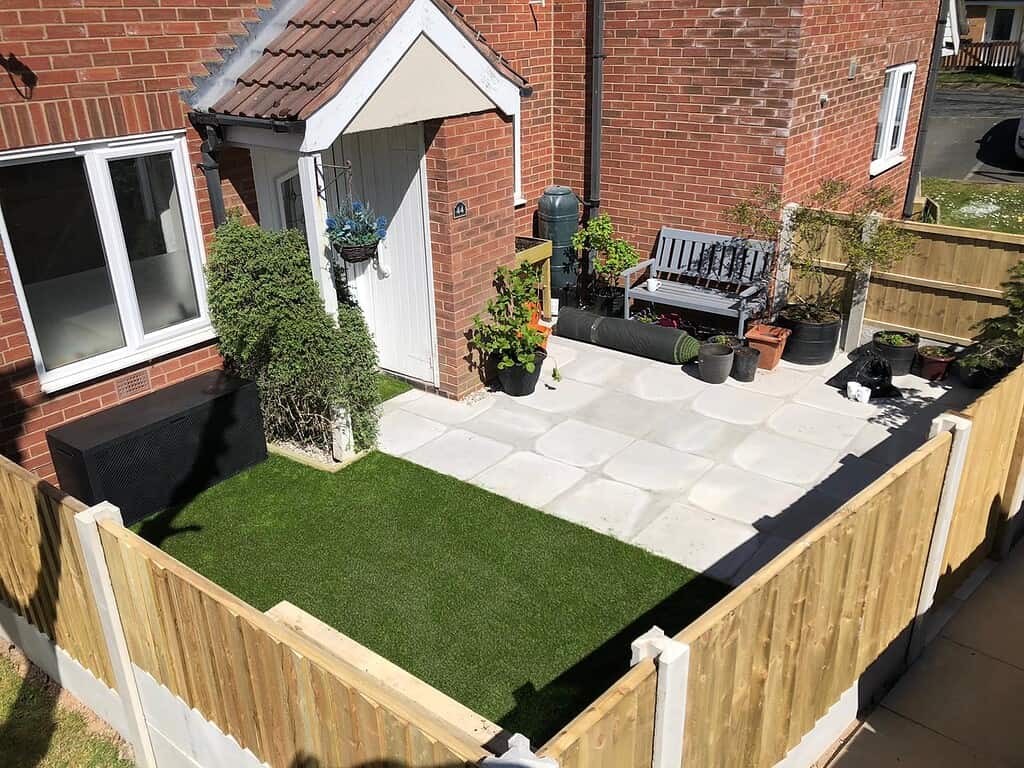
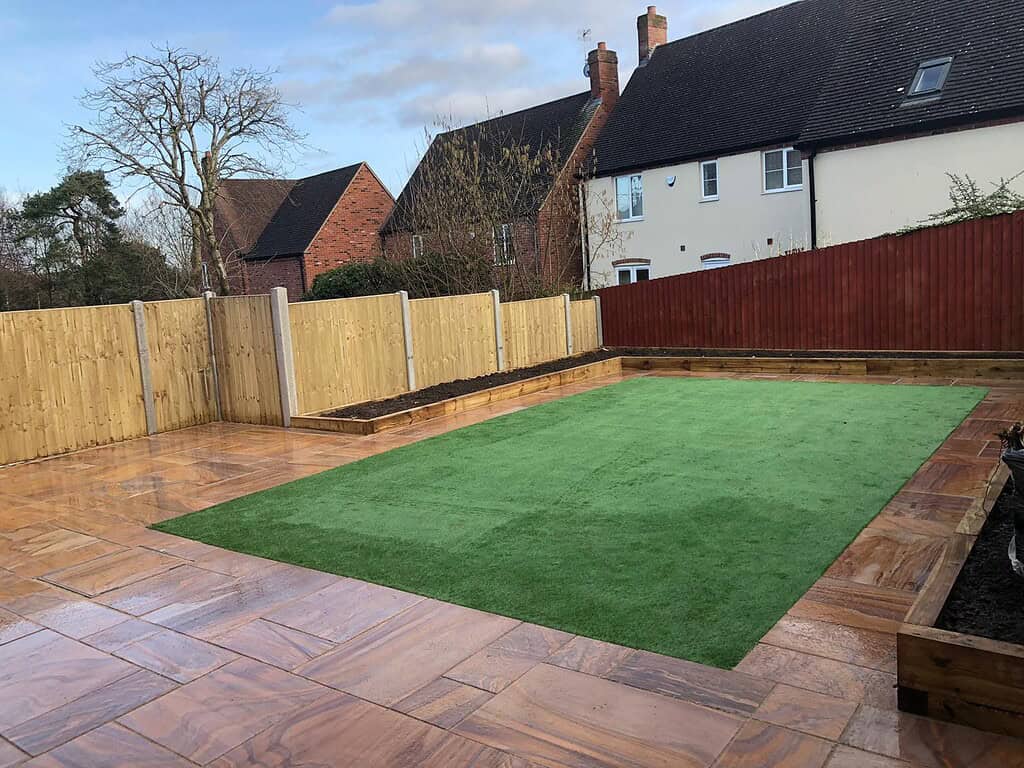
For homeowners considering artificial grass installation, it is important to address existing waterlogging rather than simply covering it.
In some gardens, improving the natural lawn may be the better option. In others, changing the surface as part of a wider landscaping project could make the space more practical.
Improving Drainage Without Rebuilding the Entire Garden
Not every soggy lawn requires extensive excavation.
Where waterlogging is relatively mild, improving soil aeration, reducing compaction and repairing isolated low areas may help the lawn recover.
It is also worth checking whether roof downpipes or nearby paved surfaces are directing excessive amounts of water towards the grass.
In gardens where the wettest section is unsuitable for a conventional lawn, a planted rain garden or moisture-tolerant border may be another option.
These features can make use of naturally damp areas while providing more variety within the landscaping.
The right approach depends on whether the problem is caused by compacted soil, poor surface levels or water entering the garden from another source.
Why Drainage Should Be Planned Before New Landscaping
If you are considering a full garden transformation, drainage should be addressed during the initial planning stage.
Installing a new patio, pathway or lawn without resolving existing waterlogging can lead to further disruption and additional expense later.
Good drainage planning also helps protect surrounding landscaping features.
Water collecting around retaining walls, paved areas or garden steps may affect their long-term performance, particularly where the foundations have not been designed for the conditions.
Taking the time to understand how water moves across the garden allows the layout, materials and groundwork to be planned together.
It is usually far more practical to deal with drainage before the finished surfaces are installed.
Garden Drainage and Landscaping in Telford
A waterlogged lawn does not necessarily mean your entire garden needs replacing. In many cases, identifying the underlying problem can lead to a much more practical and cost-effective improvement.
At SM Landscaping, we help homeowners across Telford, Wellington, Madeley, Dawley, Oakengates, Lawley, Priorslee and surrounding Shropshire areas create outdoor spaces that are attractive, practical and suited to everyday use.
Whether you are struggling with a muddy lawn, planning a new patio or considering a complete garden redesign, understanding the existing ground conditions is an important part of getting the project right.
If your garden remains soggy long after the rain has stopped, contact SM Landscaping to discuss your landscaping requirements and arrange a free, no-obligation quote.
A garden that drains properly is easier to maintain, more comfortable to use and better prepared for the changing British weather.

Do you need help from our experts
Give us a call today to get expert advice and support from our experienced team.