
Timber Decking vs Composite Decking: Which Is Best for Your Garden?
Decking can completely change how a garden is used. It creates a proper seating area, gives furniture a stable surface and helps turn an awkward outdoor space into somewhere that feels more finished.
For many homeowners, the biggest question is not whether decking is a good idea, but what type of decking to choose. Timber and composite decking are both popular, and both can work well, but they suit different gardens, budgets and maintenance expectations.
Across Telford, from family gardens in Lawley and Priorslee to more established homes around Wellington, Madeley and Dawley, decking is often used to create a practical space for relaxing, eating outside or making better use of a sloped garden. Choosing the right material from the start makes a big difference to how well it performs in the long run.
What Is Timber Decking?
Timber decking is the traditional option. It has a natural look, feels warm underfoot and can suit a wide range of garden styles. For homes with softer planting, fencing, lawn areas or a more traditional layout, timber often blends in very naturally.
It can also be a good choice for raised areas, garden seating zones and spaces where you want a relaxed, classic finish.
The main thing to remember is that timber is a natural material. That is part of its appeal, but it also means it needs care over time. Without treatment and maintenance, it can fade, weather, become slippery or start to deteriorate.
What Is Composite Decking?
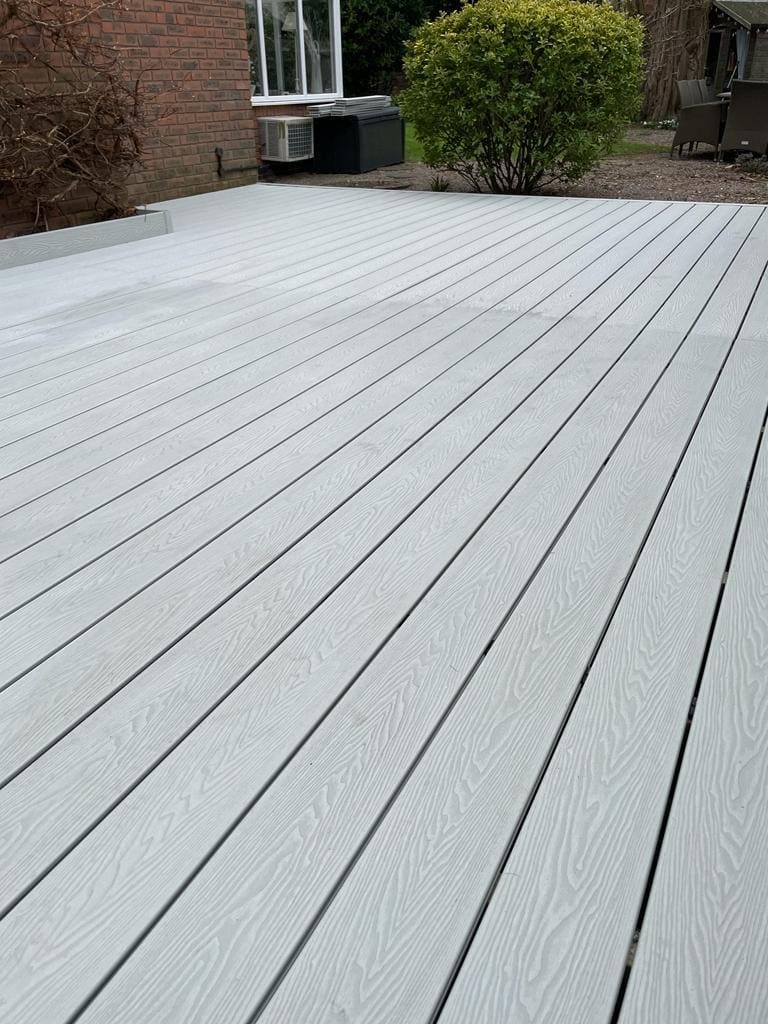
Composite decking is made from a mix of materials, often including recycled wood fibres and plastic. It is designed to give the appearance of decking while reducing the level of upkeep needed.
Composite boards are popular with homeowners who want a neat, modern finish without having to treat the surface regularly. They are available in different colours and textures, making them a good fit for contemporary gardens, newer homes and low-maintenance designs.
For properties around newer areas of Telford such as Lawley Village or Lightmoor, composite decking can work particularly well alongside modern fencing, porcelain patios and clean landscaping lines.
Appearance and Style
Timber decking has a natural character that many people love. Each board has its own grain and tone, giving the finished space a softer look. Over time, timber will naturally weather unless it is treated, which can be either a benefit or a drawback depending on the style you want.
Composite decking tends to look more consistent. Colours are usually more even, and the finish stays closer to its original appearance with less work. This makes it a strong choice for homeowners who prefer a tidy, modern garden that looks the same from season to season.
Neither option is automatically better. Timber often suits gardens with a more natural feel, while composite is ideal for a sharper, lower-maintenance finish.


Maintenance and Upkeep
This is where the difference becomes much clearer.
Timber decking needs regular maintenance to keep it looking its best. It may need cleaning, staining or oiling, especially after wet winters or long periods of shade. Gardens near trees or sheltered corners can also be more prone to moss and algae, so timber needs to be looked after properly.
Composite decking is much easier to maintain. It still needs cleaning, but it does not usually require staining or oiling. For busy households, this can be a major advantage.
If you enjoy maintaining your garden and like the look of natural materials, timber can be a great choice. If you want something simpler to live with, composite may be more suitable.
Which Handles UK Weather Better?
Telford gardens have to deal with plenty of rain, frost and changing temperatures throughout the year. Any outdoor surface needs to be chosen with that in mind.
Timber decking can perform well when installed and maintained properly, but it is more affected by moisture. If left untreated, it can become slippery or start to show signs of wear.
Composite decking is generally more resistant to moisture and weathering. It does not absorb water in the same way timber can, which helps reduce some of the common problems associated with wet conditions.
Good installation still matters. Drainage, airflow beneath the boards and proper support all affect how well the decking lasts, whatever material is chosen.
Cost and Long-Term Value
Timber decking is often cheaper at the point of installation, which makes it appealing if you are working to a tighter budget.
Composite decking usually costs more upfront, but the lower maintenance can make it more cost-effective over time. You are paying for convenience, consistency and reduced upkeep.
The right choice depends on what matters most to you. If you want a lower starting cost and are happy to maintain it, timber may suit you well. If you prefer a longer-term low-maintenance option, composite is often worth considering.
Decking for Sloped or Uneven Gardens
Decking can be especially useful in gardens with uneven levels. Rather than trying to flatten everything, a raised deck can create a practical seating area while working with the shape of the land.
This can be useful in parts of Telford where gardens are not always perfectly level, particularly around older properties or homes set near more varied ground close to areas like The Wrekin and Ironbridge Gorge.
A raised deck can turn an awkward corner into a usable feature, but the structure underneath needs to be built properly. Strong supports, safe access and good drainage are essential.
Safety and Slip Resistance
Both timber and composite decking can become slippery if not cared for, especially in shaded or damp areas. The finish, board texture and maintenance all play a role.
Composite decking is often designed with textured surfaces to improve grip, although it should still be cleaned when needed. Timber can also be safe and practical, but it requires more regular care to prevent algae and surface build-up.
Positioning matters too. A deck in full sun will dry faster than one tucked into a shaded corner beside fencing or trees.
Which One Should You Choose?
Choose timber decking if you like natural materials, want a warmer traditional look and are happy to carry out regular maintenance.
Choose composite decking if you prefer a modern finish, want less upkeep and are looking for something that keeps a more consistent appearance throughout the year.
The best decision depends on your garden, your budget and how much time you want to spend maintaining the space.
Professional Decking Installation in Telford
Decking can be a fantastic addition to a garden, but the finished result depends heavily on how it is designed and installed. The boards are only one part of the project. The frame, supports, levels, drainage and access all need to be right.
At SM Landscaping, we help homeowners across Telford and surrounding areas create outdoor spaces that are practical, attractive and built with care. Whether you are considering timber decking, composite decking or a wider garden transformation, we can help you choose an option that suits your home and how you want to use the space.
A well-built deck should feel like a natural part of the garden, not an afterthought.

Do you need help from our experts
Give us a call today to get expert advice and support from our experienced team.